
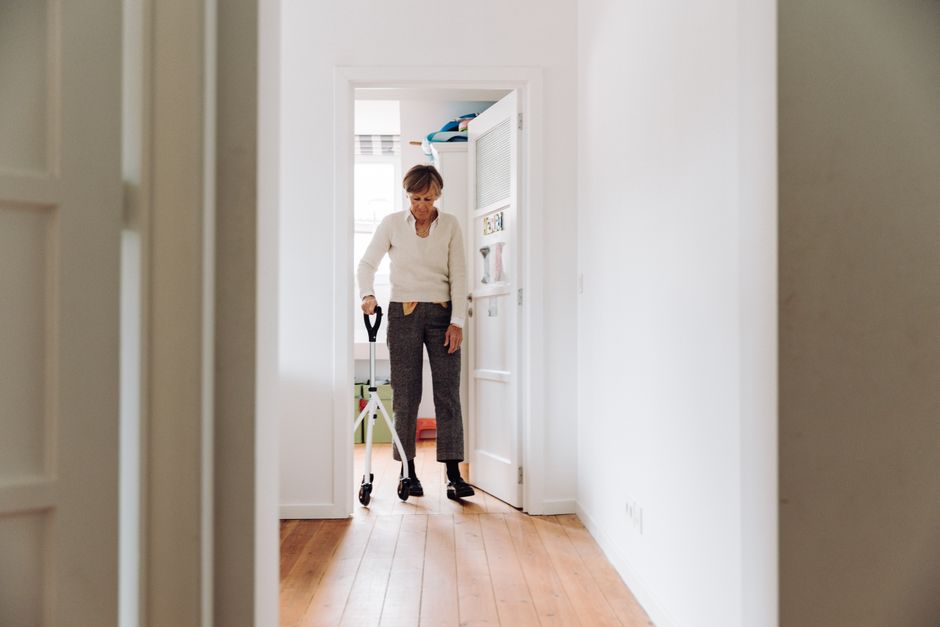
Visual impairment does not automatically prevent an older adult from living safely in assisted living. The right combination of lighting, contrast, organization, communication, mobility support, and personalized routines can help residents remain independent while reducing confusion and fall risks.
What adaptations help seniors with visual impairments?
The most useful adaptations are designed around how a resident actually sees, moves, and completes daily tasks. Vision loss may involve blurred sight, reduced peripheral vision, poor depth perception, sensitivity to glare, difficulty seeing in low light, or complete blindness. Each condition requires a somewhat different approach.
A helpful plan may include:
- Brighter, evenly distributed lighting without harsh glare
- High contrast between floors, walls, furniture, doors, and bathroom fixtures
- Clear pathways free of cords, carts, decorations, and unexpected furniture
- Large-print, tactile, or spoken information
- Consistent placement of personal items
- Staff guidance that respects independence rather than taking over
- Regular review as vision or mobility changes
Adaptations should be included in the resident’s service or support plan and revisited after a fall, medical change, new diagnosis, or change in daily functioning.
How should lighting be adjusted?
Good lighting should illuminate the task or walking path rather than shine directly into the resident’s eyes. More light is not always better. Excessive brightness, reflective surfaces, or sudden changes between dark and bright areas can make it harder to see.
Useful adjustments include:
- Even lighting in hallways, bedrooms, bathrooms, dining areas, and activity rooms
- Task lighting near reading chairs, sinks, closets, and bedside tables
- Night lighting along the path between the bed and bathroom
- Light switches that are easy to locate and operate
- Reduced glare from polished floors, mirrors, windows, and glossy countertops
- Window coverings that control strong sunlight during parts of the day
Lighting should be tested at the time the resident uses the space. A hallway that appears safe in daylight may be difficult to navigate in the evening. Seasonal changes also matter in Limerick, where shorter winter daylight and snow or ice outside can create sharper contrasts between indoor and outdoor areas.
A resident with cataracts may need help managing glare, while someone with limited night vision may need stronger pathway lighting. Staff should ask what the resident can see comfortably instead of assuming that brighter bulbs will solve the problem.
Why are color and contrast important?
Contrast helps a person distinguish one object or surface from another. A white toilet against a white bathroom wall may be difficult to locate, while a contrasting seat or grab bar may be easier to see.
Helpful examples include:
- Dark handrails against light-colored walls
- Contrasting toilet seats and bathroom fixtures
- A brightly contrasting strip along the edge of stairs
- Door frames that stand out from surrounding walls
- Light switches that contrast with the wall
- Plates and cups that contrast with the dining table
- Bedding that contrasts with the floor and nearby furniture
Patterns can create confusion. Strongly patterned rugs, upholstery, or flooring may make it harder to judge changes in elevation or identify objects. Simple surfaces are often easier to interpret.
Contrast should not be used only for decoration. It is most valuable at decision points, such as stair edges, doorways, bathroom entrances, elevator areas, and transitions between different floor surfaces.
How can an assisted living apartment be organized?
Consistency is one of the most effective adaptations for low vision. Furniture, lamps, mobility devices, clothing, toiletries, and frequently used items should remain in predictable locations.
Pathways should be wide and direct. Avoid placing a chair, wastebasket, table, or decorative object where a resident does not expect it. A small change in furniture placement can create a trip hazard for someone who relies on memory, touch, or a familiar route.
Residents may benefit from:
- A clear path from the bed to the bathroom
- Frequently used clothing stored at an accessible height
- Labels in large print, raised lettering, or braille when appropriate
- Drawer organizers that keep similar objects together
- A designated location for glasses, a cane, phone, and personal alert device
- Non-slip flooring without loose mats or curled edges
- Closed cabinet doors and drawers
Staff should explain changes before moving furniture or belongings. If an adjustment is necessary, the resident should have an opportunity to learn and practice the new arrangement.
What adaptations improve bathroom safety?
Bathrooms deserve special attention because they combine hard surfaces, water, poor depth perception, and frequent transfers from sitting to standing.
Useful features may include:
- Grab bars that contrast with the wall
- A shower seat and handheld showerhead when appropriate
- A clearly visible toilet and sink
- Non-slip flooring that does not create glare
- Good lighting around the mirror, sink, toilet, and shower
- Clearly identified hot and cold controls
- A consistent location for towels, soap, and toiletries
- A night-light or illuminated route to the bathroom
A resident who has trouble seeing water on the floor may not recognize a slipping hazard. Staff should respond promptly to spills and keep towels, clothing, and personal items out of walking paths.
Bathroom adaptations should also account for combined vision and mobility limitations. A person may see the grab bar but still be unable to reach it safely, or may identify the toilet but misjudge the distance when sitting down.
How can staff communicate effectively with a resident who has vision loss?
Staff should speak directly to the resident, identify themselves when entering, and explain what is happening before providing physical assistance. Quietly approaching from behind or moving a person without warning can be frightening and disorienting.
Helpful communication habits include:
- Saying the resident’s name before beginning a conversation
- Describing where objects are located
- Using clock-face directions when the resident prefers them
- Explaining who else is present in a room
- Reading written notices, menus, schedules, and medication instructions when requested
- Offering an arm for guidance rather than pulling or pushing
- Giving specific information instead of saying “over there”
- Announcing when leaving a room
Staff should avoid assuming that a resident cannot see anything. Many people have partial vision and may prefer to complete tasks independently with additional time, improved lighting, or a contrasting background.
What supports help with meals, activities, and social participation?
Vision loss can affect more than walking. It may make dining, recreation, medication routines, and social interaction more difficult.
Dining accommodations may include describing the location of food using a clock-face method, using contrasting plates, and keeping beverages in consistent positions. Spills should be explained rather than silently removed if the resident needs to know where items are.
Activities can be adapted with:
- Large-print materials
- High-contrast playing cards and game pieces
- Tactile crafts and objects
- Audio instructions
- Seating near the speaker or activity leader
- Adequate lighting without glare
- Verbal descriptions of demonstrations or visual events
A resident may stop attending activities because the environment feels embarrassing or confusing, not because of a lack of interest. Offering accessible formats and allowing extra time can support participation without making the resident feel singled out.
What should families ask when reviewing accommodations?
Families and residents can ask whether the residence has assessed the person’s vision-related needs in the actual living environment. Useful questions include:
- Are hallways, stairs, and bathrooms clearly lit at night?
- Can the resident receive schedules, menus, and notices in an accessible format?
- Are staff trained to guide someone with vision loss?
- How are room changes or furniture moves communicated?
- Are personal mobility devices stored without blocking pathways?
- What happens after a fall or near-fall?
- Can adaptations be updated as the resident’s vision changes?
Pennsylvania assisted living requirements include providing or arranging physical-site accommodations and equipment needed for a resident’s health, safety, movement within the residence, and safe exit. In practice, the most effective plan combines the physical environment with communication routines and individualized support.
When should adaptations be reassessed?
Adaptations should be reviewed after a fall, repeated bumping into objects, increased dependence, difficulty finding rooms, changes in glasses, a new eye condition, or a medication change that affects alertness or balance.
A vision-friendly environment is not a single product or renovation. It is an ongoing process of observing what works, listening to the resident, and correcting hazards before they cause injury. In a community with changing daylight, winter weather, and a mix of newer and older housing patterns, attention to indoor lighting, outdoor transitions, and predictable routines is especially practical.
