
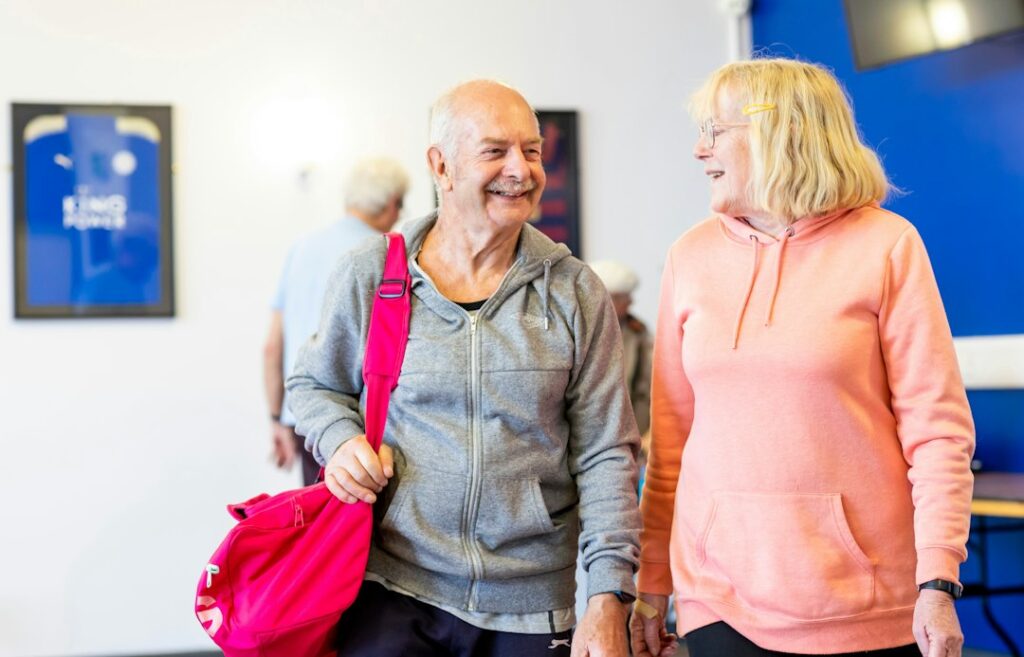
Assisted living can support senior mobility by combining safe housing, regular movement, daily assistance, and opportunities for social participation. The goal is not simply to help residents walk farther. It is to help them move safely and confidently through daily life, whether that means getting to meals, using a walker, joining an activity, or managing personal care.
Mobility needs vary widely. Some residents walk independently but tire easily. Others use canes, walkers, or wheelchairs, while some need hands-on help with transfers. A well-designed assisted living setting adapts support to the individual rather than assuming every older adult needs the same level of help.
What does mobility mean for an older adult?
Mobility includes more than walking. It also involves standing up, sitting down, turning, transferring from a bed to a chair, climbing steps, reaching for items, and moving safely through indoor and outdoor spaces.
A resident may be considered mobile even when using a wheelchair or needing assistance. The central question is whether the person can participate in daily activities as safely and independently as possible.
Mobility may be affected by:
- Loss of leg or core strength
- Arthritis, joint pain, or stiffness
- Stroke, Parkinson’s disease, or other neurological conditions
- Vision or hearing changes
- Balance problems
- Fear of falling
- Medication side effects
- Recovery after hospitalization or surgery
- Fatigue, dehydration, or poor nutrition
Assisted living can address several of these factors at the same time.
How does assisted living encourage regular movement?
Assisted living often makes movement part of the normal daily routine. Residents may walk to a dining room, activity area, lounge, garden, or common room rather than remaining in one room for most of the day.
This regular, low-pressure activity can be valuable. Short walks repeated throughout the day may be more realistic for some residents than a single long exercise session. Standing during a group activity, walking to meals, or moving through a hallway with appropriate support can help maintain strength and confidence.
Staff may also encourage residents to do tasks they can safely complete themselves instead of automatically doing everything for them. For example, a resident may be encouraged to dress independently, walk a short distance before using a wheelchair, or participate in setting up an activity. The purpose is to provide the right amount of help without creating unnecessary dependence.
What role do exercise and therapy play?
Movement programs can include strength, balance, flexibility, endurance, and coordination activities. Common examples include supervised walking, seated leg exercises, resistance-band work, gentle stretching, and balance practice.
Some residents may also receive physical or occupational therapy. Physical therapy generally focuses on movement, walking, strength, and balance. Occupational therapy often addresses daily tasks such as dressing, bathing, using adaptive equipment, and navigating the living environment safely.
Exercise should match a person’s medical condition and current abilities. A resident recovering from a fracture may need a carefully structured plan, while another person may benefit from routine walking and chair-based exercises. Pain, dizziness, shortness of breath, or sudden weakness should not be ignored during activity.
Older adults generally benefit from a combination of aerobic activity, muscle strengthening, and balance exercises. However, meeting a standard exercise target is not the only measure of success. For a person with significant limitations, maintaining the ability to stand safely for transfers or walk to the dining area may represent meaningful progress.
How does the physical setting affect mobility?
The design of a residence can either support movement or make it more difficult. Helpful features may include clear walking paths, sturdy handrails, adequate lighting, nonslip flooring, accessible bathrooms, elevators, and seating areas where residents can rest.
A familiar layout can also reduce confusion and hesitation. If dining, recreation, and personal care areas are easy to find, residents may feel more comfortable moving around without constant direction.
Bathrooms deserve particular attention. Raised toilet seats, grab bars, handheld shower equipment, shower seating, and adequate turning space can reduce strain and help residents manage personal care more safely. Bedroom arrangements should also leave enough room for walkers and wheelchairs to move without catching on furniture.
In Limerick, PA, seasonal conditions add another consideration. Snow, ice, wet leaves, and early darkness can make outdoor walking more hazardous. Safe mobility planning may include maintaining clear entrances, using appropriate footwear, allowing extra time for outdoor movement, and offering indoor walking opportunities when conditions are poor.
Can assisted living reduce the risk of falls?
Assisted living cannot eliminate falls, but it can reduce some common risks. Staff may observe changes in walking, balance, alertness, or transfer ability and report concerns before a serious fall occurs.
Fall prevention may involve:
- Reviewing medications that contribute to dizziness or drowsiness
- Checking whether a walker or cane is used correctly
- Improving lighting and removing trip hazards
- Encouraging proper footwear
- Providing help with transfers when needed
- Monitoring after illness, hospitalization, or a change in condition
- Supporting strength and balance activities

A fall can lead to fear of moving, and that fear may cause an older adult to become less active. Reduced activity can then lead to further weakness. Gentle encouragement, appropriate supervision, and gradual practice can help interrupt this cycle.
How do staff support independence without creating unnecessary risk?
Good mobility support is a balance between safety and independence. Too little assistance may expose a resident to avoidable danger. Too much assistance may cause deconditioning and reduce confidence.
Staff may use individualized care plans that describe how much help a person needs for walking, bathing, dressing, or transfers. These plans may change as the resident’s health changes.
For example, one resident may need standby assistance while walking but no physical help. Another may need a gait belt and two-person assistance for transfers. A third may use a wheelchair for longer distances but walk short distances with supervision. These differences matter because mobility is not an all-or-nothing ability.
Family members can help by sharing information about a loved one’s usual walking pattern, previous falls, preferred mobility device, pain levels, and changes noticed at home.
What should families ask about mobility before choosing assisted living?
Families should ask specific questions rather than relying on general statements about activities or care. Useful questions include:
- How are residents assessed for fall risk and mobility needs?
- Is physical or occupational therapy available when medically appropriate?
- Can residents use walkers, wheelchairs, or other mobility equipment safely?
- How are outdoor paths and entrances handled during snow or ice?
- What happens if a resident’s walking ability changes?
- Are meals and activities arranged to encourage movement without forcing it?
- How are transfers, bathing, and nighttime bathroom trips managed?
- Are exercise programs adapted for residents with arthritis, memory loss, or neurological conditions?
The answers can reveal whether mobility is treated as part of everyday care or only addressed after a fall or hospitalization.
When should a change in mobility be evaluated?
A sudden change in walking, balance, or ability to transfer deserves prompt attention. Warning signs may include new falls, shuffling, frequent dizziness, unexplained weakness, increased dependence on furniture, refusal to walk, or a noticeable decline after starting or changing medication.
New mobility problems can sometimes reflect infection, dehydration, pain, vision changes, medication effects, or another treatable condition. Safety concerns may require evaluation by a physician, physical therapist, occupational therapist, or another qualified healthcare professional.
Assisted living supports mobility best when movement is built into the environment, daily schedule, care plan, and social life. The objective is not to push every resident toward the same exercise routine. It is to preserve safe participation, confidence, and as much personal independence as the individual’s health allows.
